Home Impact
Impact
What we can actually show.
Every figure on this page comes from the foundation’s own records. Where we cannot say how we know something, we do not put a number on it.
What a year looks like
Training, then a market for what is made.
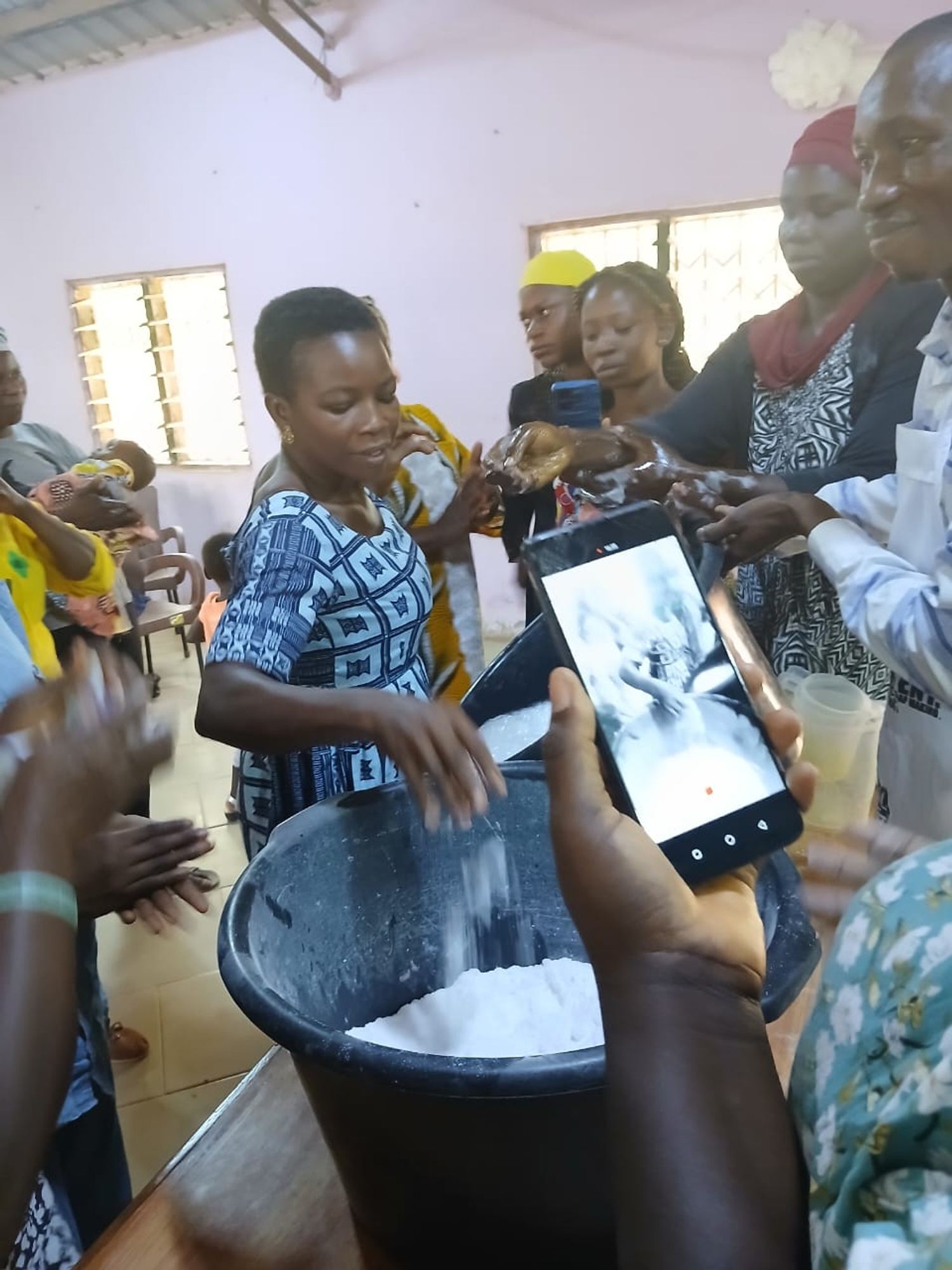
The foundation trains women to make organic soap and to extract and process plant oils — baobab, moringa, neem and carrot. That is deliberately a trade that can be carried on at home, with children nearby, and sold locally without a vehicle.
Alongside it the foundation supplies food directly, lends small sums, provides warm school lunches, uniforms and educational materials, and supports access to primary health care.
What we are not claiming
The foundation has not yet run an independent evaluation of its work.
What is on this page is a count of who the foundation supports and what it supplies — drawn from its own records, not from a study. It does not measure how much household income changed, or how long a change lasted.
That measurement is worth doing, and the foundation would welcome a partner able to fund or carry it out.
Add to it.
The foundation's funding has come from friends in the diaspora and from philanthropic individuals and organisations. As the climate and the economy have pressed harder on the rural north, the number of households needing help has grown while that support has receded.